


General


In the Asia-Pacific region, ESCO, a GPA business unit, recently achieved the highest ME04 L6 certification from Singapore’s Building and Construction Authority (BCA). This accreditation allows ESCO to manage larger, higher-budget projects and places it among only two AV companies in a select group of 26 accredited organizations.

On September 22, 2026, enterprise IT directors, corporate real estate executives, and workplace strategists gathered at Microsoft Singapore for the second international stop of the Global Forum series, ‘Re-Imagining Modern Work: The AI-Powered Workplace Evolution’. Co-hosted by GPA and local regional business unit ESCO Pte. Ltd., the event convened senior leadership from Cisco, Crestron, Logitech, Microsoft, and Sony. The objective was distinct and immediate: converting generative AI and intelligent collaboration systems from theoretical boardroom discussions into scalable, standardized enterprise architecture across the Asia-Pacific region.

The audiovisual industry is facing a critical turning point where environmental responsibility must align perfectly with enterprise performance. On October 7, 2026, industry leaders will gather to address these exact challenges at the AV Sustainability Summit in London. Setting the stage for this vital conversation, Marjolein Koens Schaddelee, Managing Director of AVEX and Board Member of GPA, will deliver the opening keynote address.
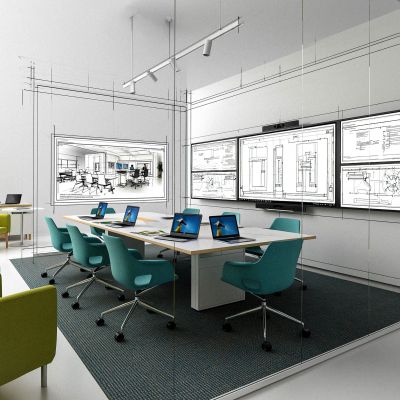
How big should a meeting room display actually be? How do facility managers, corporate real estate leads, and architects design spaces that remain functional, comfortable, and valuable for years to come?

Commercial Integrator has officially released its 40 Influencers Under 40 list for the class of 2026. Ellesse Fehlberg, Director of Global Marketing for GPA, has been recognized as one of the rising stars blazing a trail across the AV galaxy. This prestigious list highlights professionals under the age of 39 who are actively driving the future of the industry. We extend a huge thank you to the entire AV community and congratulate every single honoree on this year’s list for their incredible contributions.
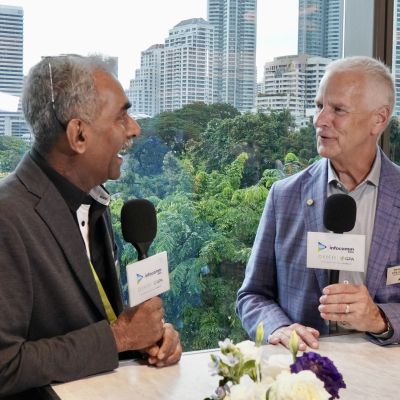
To understand where enterprise technology is going, organizations must first examine how the industry defines its core purpose. David Labuskes, CEO of AVIXA, provided a foundational perspective on this evolution in conversation with Sujith Sivaram, the Managing Director of the GPA team in Singapore. While David is not a GPA staff member, AVIXA serves as the central umbrella organization for the commercial audiovisual industry worldwide, giving him an overarching vantage point on global market maturity.


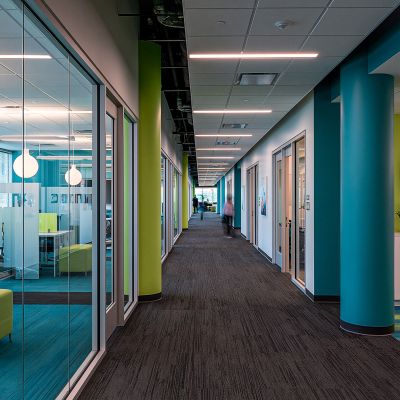
That same company has “standards” in New York, Singapore, São Paulo, and Berlin. Same label on the door. Different behavior in every room. Support tickets pile up. Local teams improvise. Procurement swaps parts when supply is tight. AV programmers tweak logic to fit what showed up on site. And slowly, quietly, the global standard becomes a reference point people cite but don’t trust.
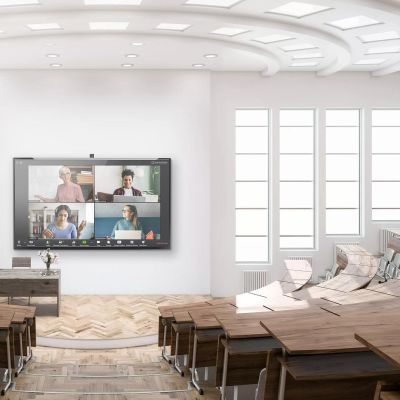
Crestron’s “True Blue” initiative is the new strategic commitment, delivering a cutting-edge market pledge that sets the benchmark for global AV excellence. This isn’t just another brand message; it’s a strategic shift designed to ensure unwavering consistency and excellence in every technology deployment, regardless of where your business operates globally.

With over 14,000 business attendees expected and a strong focus on enterprise level integration, this is not just a show for AV technicians. InfoComm India 2026 is built for the professionals tasked with shaping the digital infrastructure of tomorrow. Over 62 percent of the attendees are key decision makers, meaning the conversations happening on the floor are geared toward strategic implementation and long term ROI.

In June 2026, Logitech hosted the inaugural Southeast Asia Partner Connect event in Hanoi, Vietnam. The three day conference brought together regional partners for strategy, learning, and celebration. ESCO, the GPA Regional Business Unit for several Southeast Asian countries, was recognized with multiple top tier awards, including Partner of the Year and Rising Star Elite, across their operations in Singapore, Malaysia, the Philippines, and Indonesia.

The modern corporate campus is no longer just a physical location for employees to gather. It has evolved into a high-stakes production environment where the boundaries between enterprise IT and broadcast engineering have completely dissolved. With visual display hardware now consuming nearly half of all corporate technology budgets, organizations are under immense pressure to deliver flawless, immersive experiences that rival professional studios. However, this demand for premium visual real estate routinely collides with strict architectural limitations, aggressive sustainability mandates, and the harsh economic realities of mass deployment.