


General

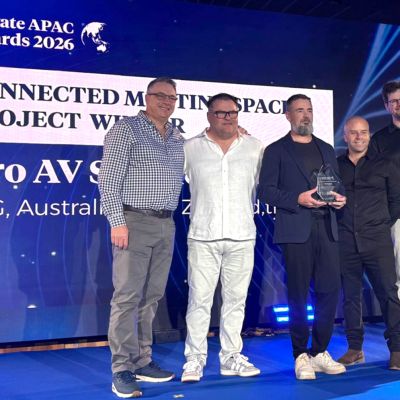

Several GPA teams took home the Connected Meeting Spaces Project Award at the Inavate APAC Awards 2026. The awards ceremony took place on July 15 in Bangkok, bringing together the full spectrum of the regional AV industry.

Located within the celebrated THE GRAND LA complex, Dataland dedicates roughly 25,000 sq ft to public galleries and 10,000 sq ft solely to the hardware infrastructure needed to support its data-driven exhibits.

The narrative shifts from reactive chaos to proactive control through the implementation of Biamp Workplace. Recognized with an Inavation Award at ISE 2026, this centralized platform fundamentally redesigns how enterprise AV is monitored. It replaces abstract data lists with actionable, geospatial intelligence.

Jabra has aligned its primary video bar systems, including the PanaCast 55 VBS and PanaCast 40 VBS, to run natively on this secure MDEP architecture. For enterprise IT directors, this integration neutralizes traditional friction in the cybersecurity procurement process. It ensures that video endpoints can be deployed across highly regulated corporate networks without exposing the organization to firmware vulnerabilities.

The momentum of global enterprise workplace standardization is officially entering the Asia-Pacific region. Following highly successful activations at major international industry events earlier this year, including ISE in Barcelona and InfoComm US, GPA is introducing its signature Global Lounge framework to InfoComm Asia 2026 in Bangkok. This strategic presence underscores a deepening commitment to localized operational support and the deployment of consistent collaboration models across the globe.

Everything needs an enabler. Let’s talk about prerequisites today. Imagine the high stakes of a multinational energy firm facing a critical regulatory audit. The executives are gathered in their primary crisis center, attempting to coordinate a rapid global response. Suddenly, the Microsoft Teams Copilot transcription begins logging absolute nonsense. The ambient noise in the room overwhelms the legacy microphones; remote stakeholders instantly lose context, and operational velocity drops to zero. The IT director watches the disaster unfold, realizing that the most expensive artificial intelligence software is entirely useless without flawless physical audio capture.

Yesterday marked the high-energy, highly anticipated kickoff of our global event series, Re-imagining Modern Work: The AI-Powered Workplace Evolution Global Forum. As organizations rapidly transition from treating AI as a buzzword to leveraging it as a foundational operational tool, the conversation has officially shifted. The question is no longer if AI will shape the workplace, but exactly how it will be designed, scaled, and managed across complex global footprints.

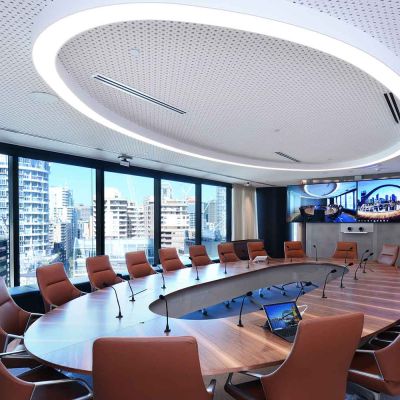
To answer this directly, multinational companies coordinate global AV projects by abandoning rigid standardization in favor of a ‘glocal’ approach. They establish a centralized Global Program Management Office (GPMO) to govern regional integrators, and they strictly manage international supply chains through landed cost analysis and regulatory compliance tracking. By treating AV not as a localized facility expense, but as a unified, enterprise-wide IT infrastructure, they achieve true global scale.

GPA and Cisco help global enterprises standardize Microsoft Teams Rooms with AI-powered Cisco devices, Connected Intelligence, and flexible interoperability.
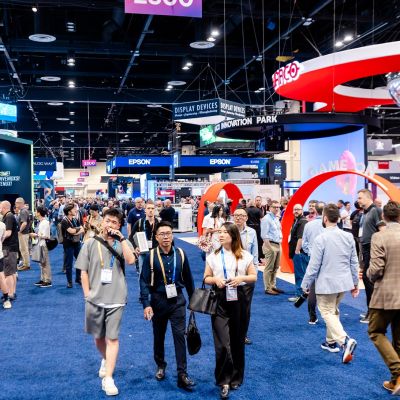
After catching my breath from the European event circuit earlier this year, it is already time to start looking at flights to Nevada. The professional audiovisual industry is gathering once again for InfoComm 2026, scheduled to take place at the Las Vegas Convention Center. While there are regional variations of this exhibition worldwide, the US iteration represents the preeminent global nexus for this rapidly evolving sector.

Multinational corporations spend billions attempting to unify their collaboration environments. Yet, IT leaders universally report a massive discrepancy between the ‘global standard’ engineered at headquarters and the reality deployed in regional offices. This report dissects the structural, cultural, and logistical root causes of this fragmentation.