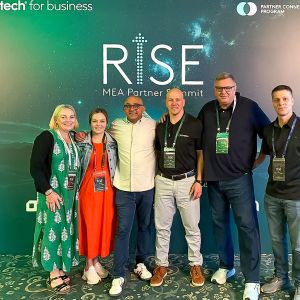


On October 8, 2026, Logitech hosted Logi Launch 2026, broadcasting globally to showcase what company leadership described as Logitech for Business’s largest product expansion. The live keynote brought together key executives from Logitech’s Team Workspace Solutions team to address one of corporate IT’s biggest operational headaches: the reality that large, high-impact conference rooms account for just 10 percent of workspace real estate, yet consume 90 percent of IT support resources.
To solve this paradox, Logitech rolled out a comprehensive next-generation hardware portfolio led by Rally Bar 2, Rally System 2 Pro, and new Sound Shape audio physics. By pairing flagship Qualcomm edge-AI processors with Microsoft Device Ecosystem Platform (MDEP) security and encrypted AV-over-IP using standard Cat6 cabling, Logitech is setting out to eliminate complex multi-vendor custom builds and create a standardized, long-term operational product lifecycle that lowers total cost of ownership (TCO). At the same time, Logitech’s new solutions are engineered for practical integration in existing spaces; key systems can integrate with leading displays and control systems, as well as specific certified third-party audio manufacturers via USB connectivity. Why is that important?

Because this allows IT departments to phase Logitech into their current environments and protect legacy investments, reducing AV and communications tech integration risks and making the transition to a standardized platform more manageable. Envision walking into a boardroom after a fresh tech rollout, expecting a trouble-free hybrid meeting, only to spend ten minutes troubleshooting why the video bar isn’t identifying the room setup. Or worse, sitting in an IT planning meeting and realizing that rapid shifts in software requirements and AI demands are pressuring your team into a premature hardware refresh well before your standard five-to-seven-year AV lifecycle is up.
If that was you, you’re not alone. At the Logi Launch 2026 event, Logitech communicated a vision to end that friction. What made this event stand out was beyond just a list of new hardware specs. It was a fundamental shift in strategy: moving away from premature hardware refreshes and toward long-term investment protection and lower TCO. So, what was actually revealed, and what does it mean for enterprise teams looking at their next workspace refresh? Let’s break it down.
Maximizing the 5-to-7-Year Hardware Refresh Cycle
For years, enterprise IT and AV teams have planned meeting room hardware refreshes around an industry average of five to seven years. However, as operating systems, certification requirements, and AI capabilities evolve faster than ever, keeping room systems capable across that entire window without premature replacements has become a major challenge.
Logitech General Manager Henry Levak and Head of System Software Vijay Karnataki made it clear that Logitech is addressing this head-on by committing to long-term investment protection. A proven software track record backs this promise. Since launching the first Rally Bar family in early 2021, Logitech has delivered 17 major software updates to first-generation units. These updates introduced sophisticated capabilities with Right Sight 2 and Right Sound 2, enabling features like Microsoft Teams Multi-Stream IntelliFrame, Zoom Intelligent Director, and support for Google Meet on Android.
Building on that foundation, Vijay Karnataki detailed the release of CollabOS 2.0, which updated the device fleet to Android 12 and extended platform support for first-generation devices through 2030. Smaller huddle rooms are also receiving similar long-term support, with Henry Levak announcing that the Rally Bar Huddle will receive a free update to Android 15, adding four extra years of operational support.

Logitech is pairing these software commitments with clear warranty and support terms intended to reassure IT teams about the longevity of their investments. All newly announced products come with a standard 2-year limited hardware warranty, which can be extended to 5 years with an extended hardware warranty or a Logitech Select service plan. Devices will receive scheduled software updates and security fixes for a minimum of 8 years from launch, covering stability improvements, new features, and compliance with the latest security standards. Importantly, Logitech has committed to providing advance notification of end-of-life and end-of-support timelines, giving organizations ample time to plan technology refreshes as well as ensuring platforms remain secure and reliable across their full lifecycle.
To keep new devices capable for the long haul, Head of Engineering Karthik Rajagopal explained that Rally Bar 2 and Roommate 2 Pro are built around flagship Qualcomm chipsets. These processors deliver four times the edge-AI processing power of second-generation video bars. This compute headroom powers heavy on-device algorithms locally, including Right Sound 3 voice isolation and Right Sight 3 multi-camera switching.
Furthermore, Henry Levak highlighted Logitech’s deep engineering partnership with Microsoft. Rally Bar 2, Tap IP 2, and Tap Scheduler 2 are built on Microsoft Device Ecosystem Platform (MDEP), providing enterprise IT departments with OS-level security compliance and administrative management right out of the box.
Installer-First Engineering and Rally Bar 2
During the product reveal, Sr. Product Manager June Wortham introduced Rally Bar 2, which combines the versatility of the Rally Bar Mini with the power of the flagship Rally Bar into a single unit that extends less than four inches from the wall.
Inside, a custom ultra-wide lens pairs with a large 1-inch DSLR-class imaging sensor, an upgraded four-speaker array, and eight digital MEMS microphones running Right Sound 3 for advanced voice isolation.

However, June Wortham emphasized that the engineering effort focused just as heavily on reducing installation friction for installers and IT technicians. Rally Bar 2 ships with a tension-hinge wall mount secured by four screws. When technicians need cable access, the video bar tilts forward steadily and holds its position while they work.
For larger spaces, cabling has been simplified significantly. Technicians can daisy-chain up to four Rally Mic Pod 2 units using standard Cat cables without demanding external couplers, extenders, or power bridges. Once plugged in, Logitech Sync auto-provisioning automatically configures and registers the device to the organization’s Sync tenant.
Solving the “10% of Spaces, 90% of IT Effort” Challenge
If you look at almost any corporate real estate footprint, large conference rooms, divisible training rooms, and multi-purpose spaces make up about 10% of total meeting rooms. Yet, ask any IT director, and they will tell you these spaces swallow 90% of their team’s support time. Why? Because they traditionally required custom AV programming, complex multi-vendor DSPs, and messy ceiling infrastructure.
Logitech addressed this directly with the Rally System 2 Pro (planned for Summer 2027). As Sr. Product Manager June Wortham and Director of Product Marketing Craig Ishii explained, the goal is to turn complex, multi-vendor custom rooms into repeatable, single-cable modular deployments.
At the center of the system is Roommate 2 Pro, a standalone compute appliance powered by Qualcomm processors capable of driving multiple cameras, speakers, mic pods, and up to three 4K displays simultaneously. The camera system features the Rally AI Camera Pro, which uses a dual-camera architecture uniting a 1-inch wide-angle digital sensor with an optical PTZ camera to keep both near and far participants in focus.

To connect these components without proprietary extension boxes, Logitech introduced Logitech Link, an encrypted AV-over-IP technology that runs over standard Cat5e or Cat6 network cables. Featuring hardware attestation and end-to-end encryption, Logitech Link keeps video and audio traffic strictly contained within the room network. Both Logitech Link and the Microsoft Device Ecosystem Platform (MDEP) are designed to meet strict enterprise security standards, including compliance with protocols such as TLS 1.3 and FIPS-certified encryption. This ensures audiovisual data satisfies industry-recognized security standards, helping IT leaders satisfy internal policy requirements for secure deployment across the organization.
Logitech Link also solves the challenge of divisible rooms. IT teams can connect up to three Rally systems using standard network cables and create preset “Room Scenes” inside Logitech Sync. These scenes allow divisible spaces to reconfigure active cameras, mics, and display routing instantly via touch panel or API without writing custom control code.
Additionally, Right Sight 3 intelligence enables flexible camera placement. Organizations can deploy perimeter wall-mounted Rally AI cameras for an “outside-in” view of presenters, or place a Center-of-table Sight camera for an “inside-out” perspective, with Right Sight 3 automatically switching to the optimal camera angle in real time.
Rethinking Room Physics with Sound Shape Audio
Audio in deep conference rooms (14 to 20 meters long) has always been a major challenge. Traditionally, solving audio in large rooms required pulling cable, cutting open ceilings, and spending days on offline DSP tuning. Head of Engineering Karthik Rajagopal presented Logitech’s solution: solving audio physics right from the front of the room using Sound Shape technology. The new Rally Speaker 2 Pro incorporates 32 tuned speaker drivers for rooms up to 14 meters, while the Rally Speaker 2 Max combines 64 drivers for spaces up to 20 meters.

Instead of spraying sound omnidirectionally like a lightbulb, Sound Shape projects audio in a tight, focused beam like a flashlight. Sound waves are shaped to precise volumetric boundaries, keeping audio levels within a less than 3 dB drop across 10+ meters of room depth. By directing sound energy toward listeners and away from glass partitions and hard reflective surfaces, echo and distortion are eliminated naturally. Because Sound Shape allows precise acoustic control, it also enables avoidance zones. Karthik Rajagopal demonstrated a concept in which a single front-of-room speaker system projects two distinct audio streams into separate areas of the same room, permitting participants on one side to hear French audio while those on the other hear English.
“Polite Technology” and End-of-Life Sustainability
Conference-room technology should support collaborating without eclipsing the room’s aesthetic. Director of Industrial Design Drew Putterman highlighted Logitech’s approach to “polite technology”, creating rounded, softer form factors in light and dark fabric finishes which merge naturally into modern office spaces.
Drew Putterman also detailed how the hardware was engineered from the ground up based on research trips directly into e-waste recycling facilities. To work with industrial recycling processes instead of against them, the fabric cover on Rally Bar 2 was designed to snap off effortlessly, allowing e-waste facilities to process the chassis through automated shredders cleanly.
Furthermore, the Rally Bar 2 chassis is die-cast from an 85% post-consumer recycled aluminum unibody. Aluminum is endlessly recyclable, and the chassis doubles as a massive thermal heat sink that takes heat away from internal electronics, keeping Qualcomm AI chips cool without requiring noisy fans.

Rally Bar 2 joins Rally Board 65 and Logitech Spot with temperature, humidity, volatile compound, and environmental sensor capabilities that report data and analytics into Sync and supported third-party platforms, bringing even more intelligence to workplace management teams.
Finally, the new Tap IP 2 and Tap Scheduler 2 panels include updated chipsets, brighter anti-glare displays, and updated presence sensors that enable automated room booking workflows and automatically release ghost-booked rooms when no attendees show up. The best part about the new models is that they work seamlessly with previous-generation mounts, so replacing older versions is a breeze.
What This Means for Your Next Office Refresh
When you step back and look at the whole picture, Logi Launch 2026 wasn’t purely about showing off new hardware. It was about giving enterprise IT leaders a repeatable, long-term blueprint for workplace collaboration. By standardizing on Cat6 infrastructure, native MDEP security, massive Qualcomm compute headroom, and longer lifecycles, organizations can finally move away from one-off custom AV builds and focus on creating consistent, reliable meeting experiences across even more spaces.
Are you looking to modernize your meeting spaces and workplace experience or rethink your workplace technology roadmap after these latest announcements? Whether you are considering a phased upgrade, planning a direct migration, or evaluating pilot deployments in select locations, it’s important to map out your next steps. Start by reviewing your current infrastructure, identifying which rooms or systems would benefit most from standardization, and consulting stakeholders across IT and facilities to build an effective deployment plan. Consider engaging with solution experts and arranging demos to ensure technology matches your organization’s goals. Let’s connect and carry on the conversation!