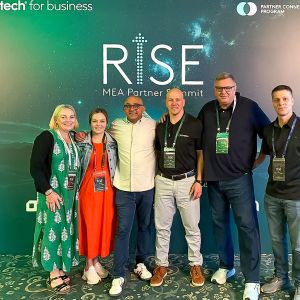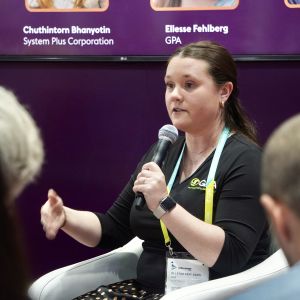


On September 22, 2026, enterprise IT directors, corporate real estate executives, and workplace strategists gathered at Microsoft Singapore for the second international stop of the Global Forum series, ‘Re-Imagining Modern Work: The AI-Powered Workplace Evolution’. Co-hosted by GPA and the local regional business unit, GPA Singapore, the event convened senior leadership from Cisco, Crestron, Logitech, Microsoft, and Sony. The objective was clear and immediate: to move generative AI and intelligent collaboration systems from theoretical boardroom discussions into scalable, standardized enterprise architecture across the Asia-Pacific region.
The forum coincided directly with the GPA CEO Summit 2026, which took place concurrently in Singapore. Assembling GPA executive leadership from around the globe in the same city created powerful operational value, reinforcing how global governance and localized engineering combine to solve enterprise deployment challenges across diverse regional territories.

Building upon the tour kickoff in Toronto earlier this year, the Singapore forum shifted attention directly toward APAC enterprise realities. As commercial office footprints across regional centers face intense performance evaluations, decision-makers focused on how intelligent meeting spaces, unified device management, and real-time facility data resolve the friction between hybrid attendance and real estate efficiency. Denise Djong, from our local team, described the experience simply with a single memorable sentence: “Adventure is in AV!”
The APAC Workplace Mandate: Realities and Real Estate Pressures
Workplace utilization metrics presented during the opening keynote highlighted the operational hurdles confronting regional leadership. Globally, 62% of corporate office space remains underutilized, while 38% of hybrid employees say their primary barrier is deciding when and why to visit the office. Furthermore, only 51% of personnel report that their current corporate facilities actively encourage them to work on site.

In dense commercial hubs such as Singapore, Tokyo, Sydney, and Hong Kong, leaving corporate floor space idle is an untenable cost. Modernizing corporate real estate requires far more than mounting video bars in empty boardrooms; it requires intelligent environments that actively remove operational friction for staff while generating telemetry for facilities planning.
Attendees examined how intelligent room infrastructure transforms meeting rooms from passive reservation spaces into active operational hubs. By integrating Microsoft Places with workplace sensors and room endpoints, organizations grant distributed teams transparent visibility into colleague schedules and desk availability. This structural shift turns the office into a functional center for group collaboration rather than a mandated desk-sitting exercise.
The Microsoft Roadmap and Autonomous Edge Intelligence
Albert Kooiman, General Manager, alongside Mehryn Corrigan, Worldwide AI Powered Workplace Program Lead at Microsoft, opened the technical sessions by outlining the roadmap for the Intelligent Workplace and Microsoft Teams. Echoing recent enterprise platform developments from Redmond, they illustrated how Microsoft 365 Copilot and edge systems increasingly automate meeting workflows.

A primary focus centered on moving autonomous software agents directly into in-room hardware. Organizations can no longer rely on manual user configuration to capture meeting minutes or establish video feeds. Kooiman and Corrigan detailed how native platform updates streamline daily usage while strengthening enterprise administrative control:
Facilitator Agent in Teams Rooms: Automates real-time transcription, structured action item generation, and agenda tracking for scheduled and impromptu sessions.
Interpreter Agent: Provides real-time, multilingual interpretation on room consoles, helping multinational APAC teams bridge regional language barriers.
Ad-Hoc Android Console Booking: Delivers walk-up instant reservations directly from Android touch controllers to resolve room contention and prevent scheduling clashes.
Idle-State Digital Signage: Transforms dormant front-of-room screens into dynamic corporate messaging channels powered by partners like Appspace and XOGO.
Passwordless Security Architecture: Transitions Teams Rooms resource accounts toward Entra ID key-based authentication, removing stored credentials from edge devices and eliminating authentication errors after system restarts.
Unified Pro Management Portal: Consolidates Windows and Android room endpoint oversight into a single administrative console, providing automated remediation and upgrade roadmaps.
Moving Beyond ‘Black Boxes’ to Measurable Business Outcomes
Hardware engineering within collaborative spaces is undergoing a foundational repositioning. Brad Hintze, Chief Marketing Officer, and Matt Aliseo, Vice President of Global Enterprise Sales at Crestron, challenged attendees to rethink endpoint hardware entirely. They argued that organizations must stop viewing AV gear as isolated ‘black boxes’ and instead treat meeting rooms as direct drivers of business outcomes.
Hintze and Aliseo stressed that enterprise customers are navigating fundamental business model transformations, not simple hardware refreshes. Workplace technology must justify its deployment by reducing support tickets, streamlining spatial agility, and delivering predictable operational uptime over long asset lifecycles.

Addressing the collaboration stack, Pratik Chanda, Global Partner and GTM Lead at Cisco, and Anil Iype, Global Partner Development Head at Logitech, demonstrated how hardware-level AI maximizes user engagement and protects capital expenditure. Through continuous room-readiness monitoring, smart multi-camera switching, and automated framing, edge hardware ensures that remote and in-room participants experience visual and auditory equity. In parallel, Rik Willemse, Head of Professional Displays and Solutions for Europe at Sony, emphasized that display clarity, optical performance, and sustainable low-power operation form the core visual benchmark for enterprise meeting rooms.
Rapid Deployment: Standardizing Enterprise Architecture
Scaling collaboration technology across regional branch offices demands reliable installation models that bypass protracted on-site engineering. The forum highlighted practical deployment frameworks, notably the Cisco Express Install architecture, designed to eliminate standard field delays.

Case study findings demonstrated how standardized equipment bundles accelerate rollouts while preserving architectural uniformity. Pre-packaged packages combining the Cisco Room Bar, Room Bar Pro, or Room Kit EQ with Ashton Bentley modular mounting and commercial Samsung displays allow organizations to stand up fully certified rooms in a fraction of traditional installation times:
Significant Cost Reduction: Organizations achieve 30% to 45% overall budget savings by eliminating bespoke on-site fabrication and simplifying cabling layouts.
Accelerated Time to Value: Field installation schedules are cut in half, allowing IT departments to turn standard focus rooms around in just over an hour.
Portfolio Versatility: Pre-engineered hardware packages scale uniformly from compact huddle booths with 43-inch screens up to large conference facilities featuring 105-inch displays.
Connecting the Dots: Eliminating Internal Friction and Scaling Globally
A standout presentation, ‘Connecting the Dots: The Practicalities behind Deployment’, led by ESCO Chief Technology Officer Chris Pitsillides alongside GPA strategists, mapped the operational realities of AV and IT convergence. Enterprise projects consistently stumble because three primary internal stakeholder groups operate with competing priorities:
Facilities and Corporate Real Estate: Focuses on spatial utilization, commercial lease efficiency, power consumption, and physical plant integrity.
Information Technology: Focuses on network security, endpoint encryption, firmware compliance, cloud platform uptime, and rapid SLA remediation.
Business Line Leadership: Measures operational throughput, team collaboration, talent retention, and visible return on capital investments.
When facilities teams procure building automation hardware without IT coordination, network vulnerabilities inevitably surface. Conversely, when IT rolls out software tools without analyzing physical room acoustics and line-of-sight constraints, staff abandon the rooms.

Pitsillides explained how GPA mitigates risk by serving as the connective framework between enterprise clients and technology partners like Microsoft. Holding elite status as a top 1% global Microsoft Solutions Partner with more than 120,000 Teams Rooms integrated and supported worldwide, GPA pairs centralized strategy with local execution. Enterprises define architectural standards centrally, while ESCO and regional delivery teams execute in-country procurement, logistics, customs clearance, and local-language lifecycle support.
Executive Panel: From Hype to Reality in APAC
The event culminated in an executive panel titled ‘From hype to reality: AI in Action’, gathering leaders from Cisco, Crestron, Logitech, and Microsoft. With Chris Bottger, Leader of Workplace Experience GTM and Strategy at Cisco, joining the stage alongside fellow keynote speakers, the panel tackled direct audience questions regarding the modern work stack.

The discussion zeroed in on what enterprise collaboration will look like leading up to 2030. The executives examined the realities of managing multi-platform environments, maintaining data privacy across AI transcription tools, and transitioning from small proof-of-concept setups to enterprise-wide standardizations.
The primary conclusion for enterprise decision-makers was unmistakable: pilot programs must translate into production architecture. Organizations that modernize workspaces with measurable spatial data, structured ecosystem interoperability, and coordinated global deployment frameworks will build workplaces that attract teams and sustain long-term business performance.