

AV Workplace Innovation: Why Outcomes Matter More Than Hardware

Have you ever spent a massive budget on boardroom technology, only to realize the real challenge begins the day after it is installed? The modern workplace is evolving at a breakneck pace, and organizations are scrambling to keep up.
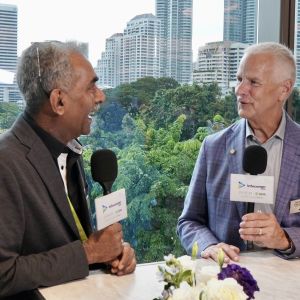
Christopher Lim, President of the AV Division of ESCO, our GPA regional team in Southeast Asia, recently shared a compelling perspective on where corporate technology is heading. Chris emphasized a harsh reality for enterprise buyers. The future of collaboration relies entirely on data management, predictive maintenance, and seamless artificial intelligence, rather than just buying the latest screens.
The most critical takeaway for global enterprises is a shift in mindset. Organizations must stop focusing heavily on hardware specifications and start designing their meeting spaces around long-term human outcomes.
The True Lifecycle of User Experience
What actually happens to a meeting space over a five-year lifecycle? It is incredibly common for project teams to view the handover date as the finish line. However, the user experience is not confined to the initial project phase.
The real test of a room happens over the next five years of daily operation. Over that lifespan, equipment degrades, software updates change interfaces, and user habits evolve. If the technology is not managed actively, the user experience degrades rapidly.
To prevent this, enterprises need an overarching platform to tie everything together. Managing the user experience requires a proactive approach where room performance is constantly monitored and adjusted long after the integration team leaves the building.
Solving the Platform Puzzle
How many different dashboards does your IT team check every morning to see if the microphones work? We have seen a massive trend where individual manufacturers expand their portfolios and build their own management platforms.
While these proprietary systems fill gaps in a specific product line, they create a chaotic environment for system integrators and IT departments. There are too many different platforms to choose from. To solve this, experts develop custom overlay platforms that aggregate information from all these disparate sources.
This aggregated data is incredibly powerful. It is not just about selling extra software licenses. It enables a completely preemptive approach to service issues. When integrators can spot a failing component remotely, they can fix the problem before a user even walks into the room and ruins their day.
In high-cost markets like Singapore, optimizing resources through remote troubleshooting drastically improves efficiency and productivity. Furthermore, gathering basic data like room utilization, people counting, and air quality allows a workplace strategy team to make informed decisions rather than relying on common workforce feedback.
The Reality of AI in the Room
Are you still pushing buttons to start a video call? We are already living in an AI world, and the technology is deeply embedded in our daily tools. Major platforms like Microsoft, Cisco, and Zoom have heavily integrated artificial intelligence.
We are also seeing AI directly at the hardware level. Features like audio optimization and automatic camera tracking are standard capabilities built into modern conference room equipment. However, the next phase of collaboration requires a unified strategy to make these tools even more usable.
Imagine walking into a meeting room and having the system instantly recognize the host, automatically starting the meeting without requiring a single touch. That is the true future of AI. Achieving this requires deep interoperability between different productivity platforms so users do not have to toggle between applications to get their work done constantly.
Are you ready?
Whether or not you already have all the questions and answers, if you feel this resonates with your own thinking, we should talk about your next steps right away.
Buying Outcomes Over Specifications
What is the one thing enterprise buyers need to stop doing right now? When planning a global rollout, the immediate instinct is often to compare hardware spec sheets. Chris points out that customers need to focus less on the hardware itself and focus much more on the outcomes they want to achieve.
A list of impressive technical specifications means absolutely nothing if the room does not support the way your team actually works. Success comes from defining the exact human experience you want to create and then building the design standards and development to support it.
Through rigorous installation and deployment practices, our global teams maintain the highest level of technical competency to ensure whatever we design, we can flawlessly deploy.
If you are ready to shift your focus from hardware specs to true workplace innovation, contact our global integration experts today to discuss your next big project.

![How Big Should a Meeting Room Display Be? [A Guide for Space Planners and Workplace Architects]](https://thinkgpa.com/wp-content/uploads/2026/09/transparent-thegem-product-justified-square-s.png)