


Christopher Isak


Imagine the central command center or the flagship architectural lobby of a global tech headquarters. It is high noon, and sunlight is pouring through the floor-to-ceiling glass. A critical live data visualization or a high-production brand film is playing on the massive video wall. Suddenly, the intense ambient light washes the contrast out into a milky gray. A cluster of damaged pixels from a recent cleaning mishap draws the eye like a magnet, ruining the visual fidelity. For the stakeholders in the room, the experience is incredibly underwhelming. For remote teams or public audiences watching a live broadcast feed of the space, distracting scan lines crawl across the screen constantly.

Looking for the latest in AV technology? The upcoming InfoComm China, held from 15–17 April 2026 at the China National Convention Center, presents the perfect opportunity to plan your visit.
Providing a consistent user experience across global corporate venues requires deep expertise and reliable technology partners. Enterprise IT and facilities managers cannot afford technical friction when organizing major offsite events.

Standardizing sustainable AV integrations across borders is a massive challenge. Discover how GPA leaders from EMEA, the Americas, and APAC are turning regional friction into shared global solutions following their recent panel at ISE 2026.
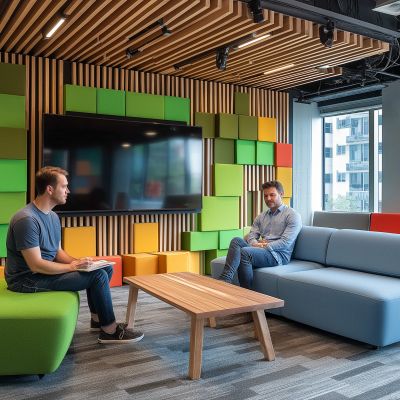
Sujith Sivaram, Managing Director at ESCO, and Lex Strauss, APAC Consulting Lead for Office Technology at Ernst & Young, recently sat down to map out a comprehensive blueprint for IT and facilities leaders on how to future-proof modern workspaces. Featured in The ESCO Times, their conversation offers insights on getting workplace technology right the first time.

Integrated Systems Europe (ISE) 2026 signaled a definitive maturation for the audiovisual sector. As 92,170 attendees and 1,751 exhibitors gathered at the Fira de Barcelona this February, it was clear that the industry has moved beyond the hardware novelty phase. While 101,000 square meters of technology filled the venue, the focus was not about technical specifications; it was about solving real-world friction in an era of flat budgets and shifting workplace cultures.
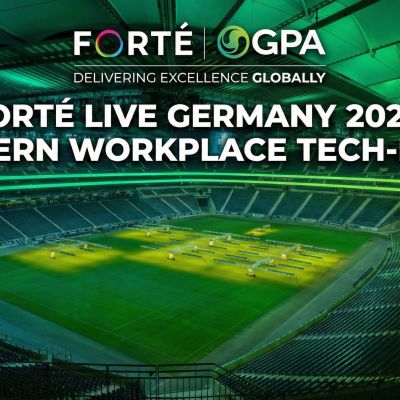
On April 16, 2026, the world of workplace technology comes alive at Deutsche Bank Park in Frankfurt. FORTÉ LIVE Germany marks the debut of North America’s premier tech expo format on European soil, bringing together industry leaders, innovators, and technology enthusiasts for an unprecedented experience.
Discover the future of AV at ISE 2026. Join experts and innovators in Barcelona for a unique industry experience!
Conference audio goes way back. A collection of single-purpose black boxes has defined professional audio in the enterprise. A DSP for processing, a codec for communication, and receivers for wireless microphones, alongside the installed microphones and speakers themselves, each represented a separate hardware investment. Beyond the capital expense, each box added layers of design, installation, and configuration costs, while consuming rack space and power.

Many of us have been there. For decades, managing a global fleet of audiovisual assets has been a reactive, resource-intensive process. When a system in a distant office failed, the response was inevitably a service call, leading to costly downtime and dispatching technicians. Hardware reliability, while important, is now merely table stakes. The true competitive advantage for a global enterprise in 2025 lies in manageability. The critical question for IT leaders is no longer if the technology works, but how efficiently it can be monitored, maintained, and optimized at scale. How do you ensure a consistent, high-quality experience across 500 meeting rooms without hiring 50 new technicians?

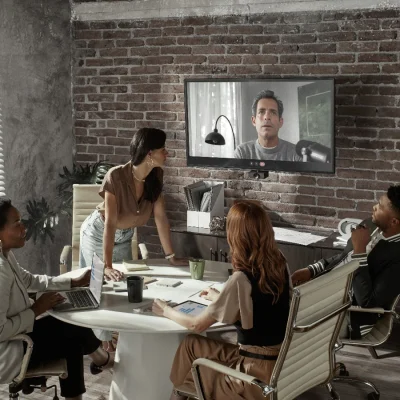
Hybrid work can mean anything and everything by now, depending on who you ask. The transition to a permanent hybrid work model is complete. For global enterprises, “hybrid work” is now just “work.” Yet, a critical challenge remains that technology alone has struggled to solve: meeting equity. If your remote workers are treated like second-class citizens in meetings, with a poor view of the room and no voice in the conversation, your collaboration strategy is failing. The solution is not simply better cameras or microphones; it is about adding a new layer of intelligence to the meeting room itself.

Is value only what can be seen? For years, technology has often been the adversary of intentional interior design. Conversations about AV systems typically happened long after architectural plans were finalized. For architects and designers, technology was the clunky black box, the source of unwanted heat, and the obtrusive element they were forced to accommodate rather than integrate. In the most exclusive corporate environments, from the C-suite office to the client-facing boardroom, the primary goal was to conceal the hardware. Now, a new philosophy has emerged, driven by groundbreaking display technology: what if the display could simply disappear?